Cyber Insurance for Small Business Explained
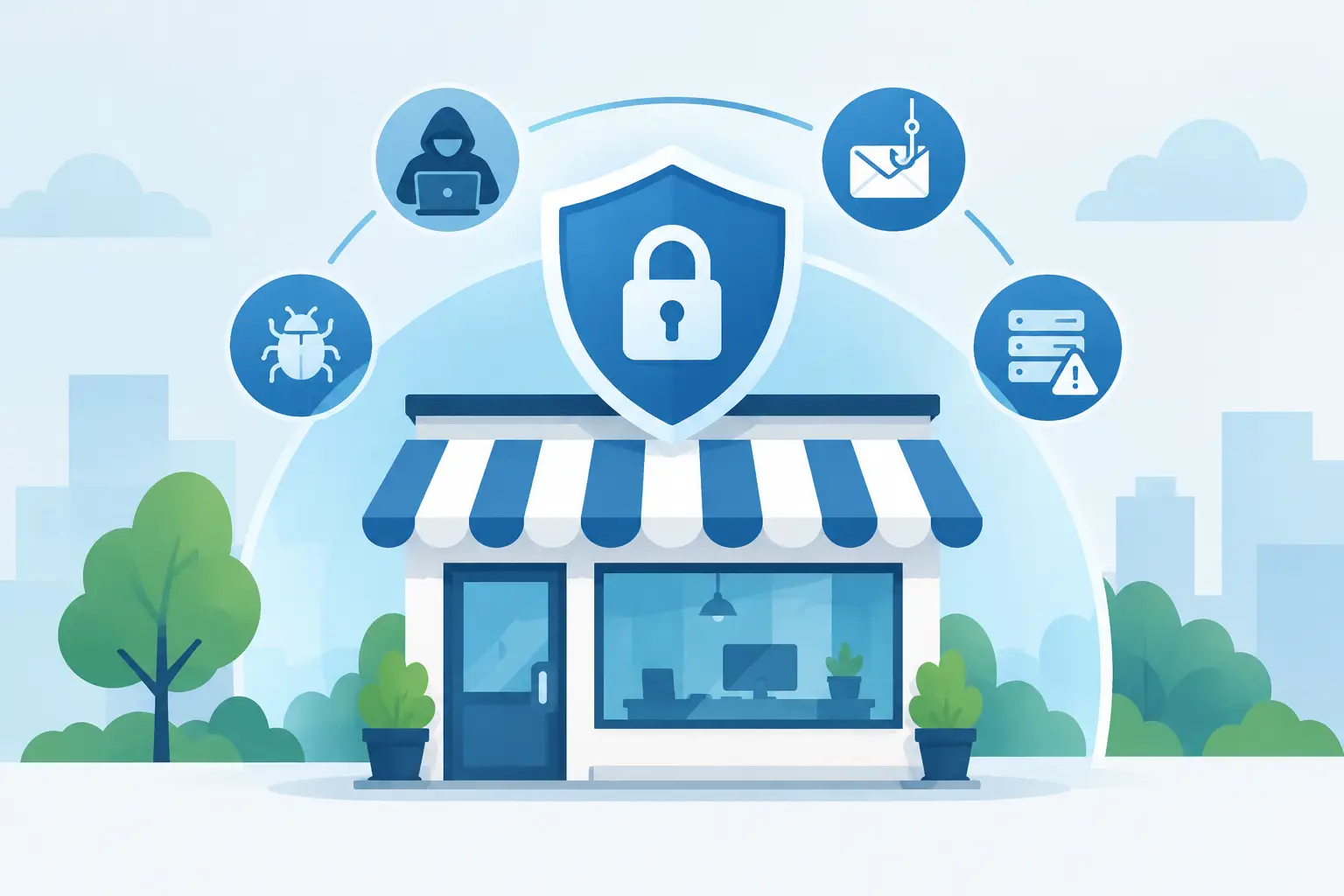
A ransomware demand, fraudulent wire transfer, or exposed customer file can interrupt a small company as severely as a fire or major equipment failure. Cyber insurance for small business is designed to fund the specialized response required after a technology-related incident while helping protect cash flow, customer relationships, and continuity of operations.
For many owners, the concern is not whether their business is large enough to attract attention. It is whether one incident could create costs that exceed the resources available to respond. Attackers frequently target smaller organizations because they may have fewer security controls, limited internal IT capacity, and less room for prolonged downtime.
Why cyber risk is an operational risk
Cyber losses do not begin and end with a hacker accessing a network. A business can face a cyber claim after an employee sends money to a fraudulent bank account, a vendor's email account is compromised, a laptop containing customer information is stolen, or a cloud-based system becomes unavailable.
The immediate expense can be significant, but the wider operational consequences often cause the greater strain. A manufacturer may be unable to receive orders or schedule production. A professional services firm may lose access to client files. A medical, retail, or hospitality business may need to determine whether personal information was exposed and meet legal notification obligations.
A well-structured policy provides access to qualified incident-response professionals when timing matters. It can also establish a clear path for handling the claim, preserving evidence, communicating with affected parties, and restoring systems. That support is particularly valuable for businesses that do not maintain a dedicated cybersecurity or legal team.
What cyber insurance for small business can cover
Cyber policies vary substantially by carrier, industry, and form. Coverage should be reviewed against the way the company uses technology, handles information, accepts payments, and depends on third parties. Most strong programs address both first-party loss and liability to others.
First-party response and recovery costs
First-party coverage is intended to help the insured business manage its own loss. Depending on the policy, this may include forensic investigation to identify how the incident occurred, legal counsel and privacy support, notification and credit-monitoring costs, data restoration, and public-relations assistance.
Business interruption coverage can be equally important. When an attack or system failure prevents normal operations, the policy may reimburse lost income and certain extra expenses during the covered period of restoration. The details matter. Some forms require a waiting period before coverage begins, and some provide more limited protection for outages involving a cloud provider or other technology vendor.
Cyber extortion coverage may help with the cost of responding to ransomware or another threat to disrupt systems or release information. Payment of a demand is not automatic or appropriate in every event. Insurers, breach counsel, forensic firms, and law enforcement considerations all play a role. The policy's value is the coordinated response, not simply the prospect of paying a criminal.
Liability, privacy, and regulatory exposure
If customer, employee, patient, or vendor information is accessed or disclosed, the business may face allegations that it failed to protect the data. Cyber liability coverage can respond to defense costs, settlements, judgments, and certain privacy-related claims, subject to policy terms.
Regulatory matters require close attention. State privacy laws, contractual commitments, and sector-specific requirements can create obligations after a breach. New Jersey businesses may also have customers, employees, or partners in other states, expanding the compliance picture. A policy should be evaluated for coverage of regulatory defense and, where legally insurable, fines and penalties.
Social engineering and funds-transfer fraud
A standard cyber policy may not fully cover every fraudulent transfer. Social engineering losses occur when a criminal impersonates an executive, customer, vendor, or financial institution and persuades an employee to send money or change payment instructions.
This exposure is often subject to a separate sublimit, special conditions, or a specific endorsement. Crime insurance may also be part of the solution. A company that regularly sends wires, manages payroll, or pays vendors electronically should review these coverages together rather than assume a cyber policy will address the full loss.
Set limits based on the cost of a real incident
Selecting a limit based solely on annual revenue or the lowest available premium can leave a business underprotected. A more useful approach is to model a plausible event: how long could operations be impaired, what data would require review, and which outside specialists would need to be retained?
Consider the likely cost of forensic work, legal counsel, notification, system restoration, customer support, lost income, and potential contractual liability. Companies with payment-card information, protected health information, large employee records, or sensitive client files may need higher limits than a business with limited personal data. Organizations whose operations depend on a single software platform should also evaluate contingent business interruption exposure.
Retention deserves the same attention. A higher deductible can reduce premium, but it should be an amount the company can absorb without delaying the response. Cyber incidents move quickly. A retention that appears manageable on paper can be difficult if the business is already experiencing an interruption in revenue.
Read the conditions before a claim occurs
Cyber insurance is not a substitute for disciplined technology practices. Carriers increasingly evaluate controls during underwriting, and some policies include conditions that can affect coverage. The exact requirements differ, but insurers commonly focus on multifactor authentication, secure remote access, backup practices, endpoint protection, employee training, and procedures for authorizing fund transfers.
Four controls deserve regular attention:
Multifactor authentication for email, remote access, financial systems, and administrator accounts.
Tested, segregated backups that can restore essential data after ransomware or system failure.
Verification procedures for changes to banking instructions, payroll requests, and wire transfers.
A written incident-response plan with current emergency contacts and clear internal decision-makers.
These measures reduce the chance and severity of loss, but they also improve the company's ability to demonstrate reasonable security practices. If a control listed in an insurance application is not actually in place, a claim dispute may become more likely. Applications should be completed accurately and revisited when systems, vendors, or operations change.
Coordinate cyber coverage with the rest of the insurance program
Cyber exposure overlaps with several other lines of coverage. Crime insurance may address employee dishonesty and certain fraud events. Property and business interruption policies may respond to physical damage, but often do not address the technology-driven income loss that follows a cyberattack. Errors and omissions coverage may be relevant when a client alleges that professional services were affected by a security failure.
Vendor contracts also matter. A software provider, managed service provider, payment processor, or cloud host may have contractual limits on its own liability. The business should understand where it retains risk if that third party suffers an outage or breach. Reviewing those agreements alongside the insurance program can identify gaps before they become an expensive dispute.
For companies with complex operations, a coordinated review is more valuable than treating cyber as a stand-alone purchase. The goal is to align cyber limits, crime protection, contractual requirements, and operational recovery planning around the exposures that could materially affect the organization.
What to do when an incident is suspected
Speed and discipline are critical. Disconnecting a compromised device may be appropriate, but shutting down systems without guidance can destroy evidence or create additional disruption. Preserve communications, document what is known, and notify the carrier or broker promptly through the policy's reporting channel.
Do not independently hire forensic vendors, make public statements, or promise credit monitoring before reviewing the policy's incident-response process. Many carriers require use of approved counsel and vendors, and those professionals can help protect legal privileges while directing the investigation. Early coordination gives the business the best opportunity to contain the event, meet obligations, and document a covered loss.
The right cyber policy is one part of a resilient operating plan. A careful review of technology dependencies, financial controls, employee practices, and recovery priorities gives leadership a clearer basis for selecting coverage that will respond when the business needs it most.


Comments