Commercial General Liability Coverage Explained
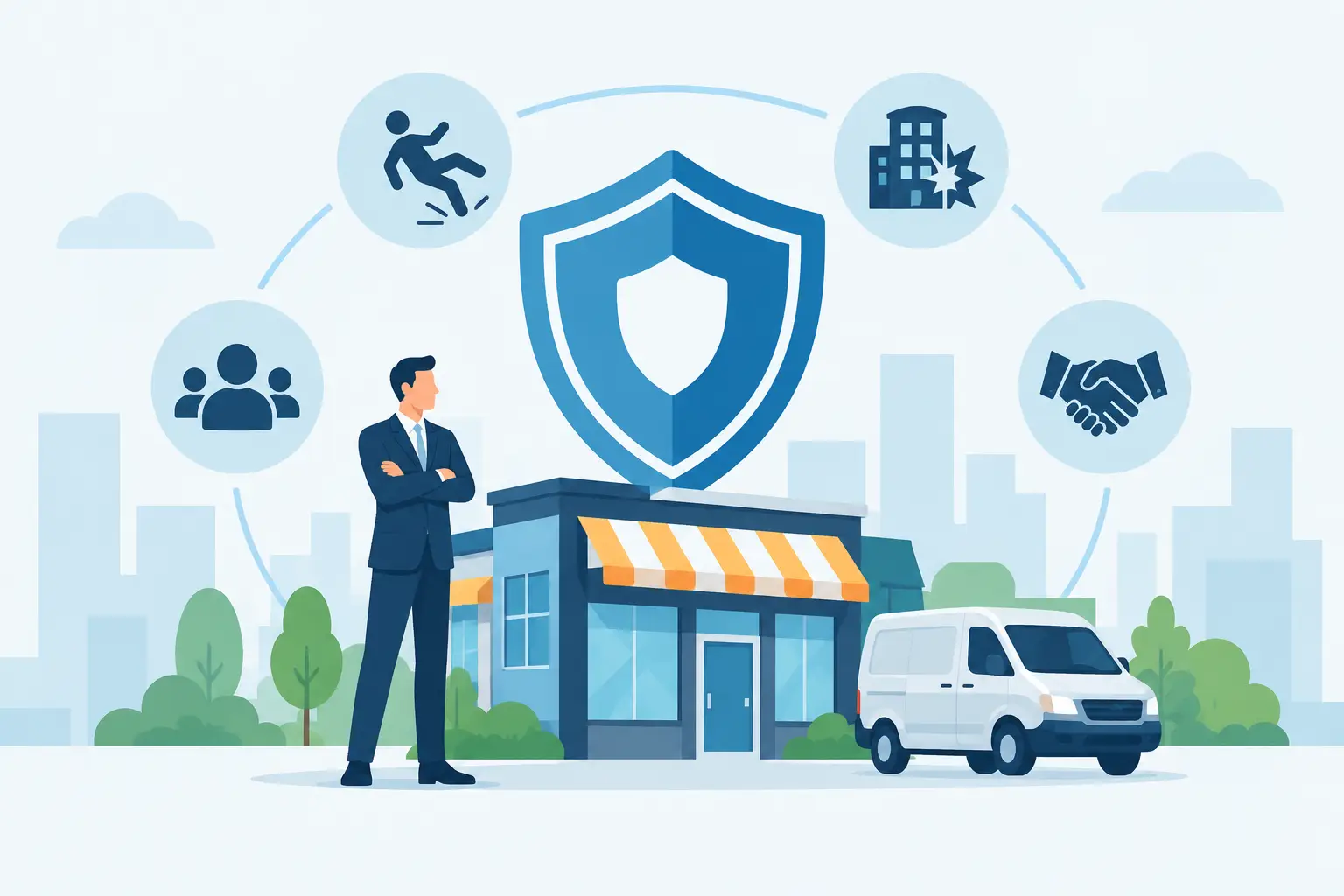
A customer slips on a wet entryway, a contractor damages a client’s property, or a competitor alleges that an advertisement harmed its reputation. Any one of these events can become an expensive claim. Commercial general liability coverage is designed to address this category of third-party risk before it threatens cash flow, contracts, or day-to-day operations.
For business leaders, the question is not simply whether a general liability policy is required. The more useful question is whether the policy reflects how the organization actually operates, where its work takes place, and what contractual obligations it has accepted. A low premium may look efficient until an exclusion, inadequate limit, or missing endorsement leaves the business responsible for a loss.
What Commercial General Liability Coverage Is Designed to Protect
Commercial general liability coverage, often called CGL insurance, generally responds to allegations that your business caused bodily injury, property damage, or certain personal and advertising injuries to another party. It can also provide a legal defense when a covered claim is made, even if the allegation is ultimately unfounded.
This distinction matters. General liability is not a policy for damage to your own building, equipment, inventory, or employees. It is principally a third-party liability policy. It helps protect the company when someone outside the organization says the company’s operations, premises, products, or completed work caused harm.
A standard policy typically includes three core coverage areas. Bodily injury and property damage liability can apply when a visitor is injured at your location or when your operations damage a customer’s property. Personal and advertising injury can address allegations such as libel, slander, certain privacy violations, or use of another party’s advertising idea. Products-completed operations coverage can apply after a product has been sold or work has been completed, subject to the policy terms.
The facts control the outcome. A restaurant, manufacturer, professional service firm, transportation company, and construction contractor can all purchase CGL insurance, but they present very different exposures. Their policy language, endorsements, limits, and related insurance should not be identical.
The Cost of a Claim Goes Beyond the Demand Letter
A liability claim can create financial pressure long before a court makes a decision. The business may need to preserve records, notify customers, respond to attorneys, manage public-facing communications, and redirect leadership time away from operations. If a lawsuit follows, defense costs can become substantial.
Many general liability policies provide defense coverage in addition to the policy limit, but this is not universal. Some forms may treat defense expenses differently, and certain specialized placements can structure costs within the limit. That difference deserves attention because legal expenses can reduce the amount remaining to pay a settlement or judgment.
A policy also has limits, commonly expressed as a per-occurrence limit and a general aggregate limit. The per-occurrence limit is generally the most the insurer will pay for one covered occurrence. The aggregate is generally the most it will pay for covered claims during the policy period. There may also be a separate products-completed operations aggregate.
Choosing limits should not be based only on a lease or vendor contract. Those requirements establish a minimum, not necessarily an adequate risk position. A business with frequent public traffic, high-value client property, complex job sites, or large contractual commitments may need a higher limit and excess liability protection above the primary policy.
What General Liability Usually Does Not Cover
A well-structured insurance program is coordinated because general liability has clear boundaries. It is a critical foundation, but it is not a substitute for every liability policy a business may need.
Professional mistakes, negligent advice, design errors, and failures to deliver specialized services are commonly addressed through professional liability or errors and omissions coverage. Employee injuries are generally handled through workers’ compensation. Accidents involving company-owned or business-use vehicles typically belong under commercial auto coverage. Data breaches, ransomware events, and privacy liability require cyber coverage.
Other common gaps include damage to property in your care, custody, or control; faulty workmanship or the cost to repair your own defective work; pollution-related losses; employment practices allegations; and intentional acts. Contractual liability can be particularly nuanced. A contract may require your business to assume obligations that the standard policy does not fully cover without the right endorsements.
None of these exclusions means a company is unprotected by default. They mean the risk should be identified and assigned to the appropriate coverage solution. For organizations with specialized exposures, this may include industry-specific liability forms, environmental coverage, management liability, surety considerations, or alternative-risk programs.
Contracts Often Set the Real Coverage Standard
Many businesses first encounter insurance requirements when a customer, landlord, general contractor, or government entity sends over a contract. The insurance section may require general liability limits, additional insured status, primary and noncontributory wording, waiver of subrogation, or products-completed operations coverage.
A certificate of insurance may confirm that a policy exists, but it does not change the policy. The underlying coverage and required endorsements must support the contractual commitment. This is where rushed certificate requests can create avoidable exposure. If the contract requires ongoing completed-operations coverage after a project is finished, for example, the business needs to confirm that its policy structure addresses that obligation.
Additional insured requirements also deserve careful review. They are common in construction, real estate, logistics, and vendor relationships, but the proper endorsement depends on the relationship and the work. Broadly agreeing to every request without reviewing the indemnification language can transfer more risk than the organization intended to assume.
Build Coverage Around Operations, Not a Generic Class Code
Insurance applications use class codes and revenue estimates to begin the underwriting process. Useful as they are, they do not tell the whole story. A strong placement process examines how the company generates revenue, where work occurs, who performs it, what contracts govern it, and how losses could develop.
For example, a contractor may need to consider subcontractor controls, job-site safety practices, completed-work exposure, and contractual risk transfer. A manufacturer may need to evaluate product distribution, quality control, recall concerns, and customer concentration. A retail or hospitality business may focus on premises safety, security, customer traffic, and vendor agreements.
The same principle applies to small businesses. A company with modest revenue can still face a major claim if it works at client locations, serves the public, installs products, or signs contracts with larger organizations. Exposure is driven by operations and consequences, not revenue alone.
Williams Insurance Services approaches placement as part of a broader risk strategy. The objective is to align coverage with operational realities, coordinate related policies, and create a clear path for claims support when an incident occurs.
Claims Response Is Part of the Coverage Strategy
When an incident occurs, early action can preserve options. Businesses should document the event, gather photographs or video when appropriate, identify witnesses, preserve relevant contracts and communications, and report the matter promptly according to policy requirements. A delay can complicate the insurer’s investigation and defense.
Employees should also know what not to do. They should not admit fault, promise payment, alter records, or discuss the matter publicly without direction. A calm, consistent internal process protects the business while the claim is evaluated.
Claims management is not only about reporting losses. It is also about identifying the conditions that caused them. Repeated slip-and-fall claims may call for improved maintenance records and safety procedures. Recurrent property-damage allegations may point to training, supervision, packaging, or vendor-management issues. Loss-prevention work can strengthen operations while making the organization a more favorable risk over time.
Questions to Ask Before Renewing Your Policy
Before renewal, decision-makers should review whether revenue, payroll, locations, products, services, or contract requirements have changed. They should also assess prior claims, near misses, new clients, subcontractor relationships, and plans for expansion.
Ask whether the per-occurrence and aggregate limits still reflect the company’s largest plausible loss. Confirm how defense costs are handled. Review key exclusions and endorsements rather than relying on a certificate or policy summary. If the business performs work after hours, operates across state lines, leases space, uses temporary labor, or works in regulated industries, those details should be part of the discussion.
The right commercial general liability coverage is not defined by a single carrier form or a standard limit. It is defined by whether the policy, endorsements, related coverages, and claims process work together when the business needs protection most. A focused annual review gives leadership the chance to correct gaps while there is still time to make a strategic decision.



Comments