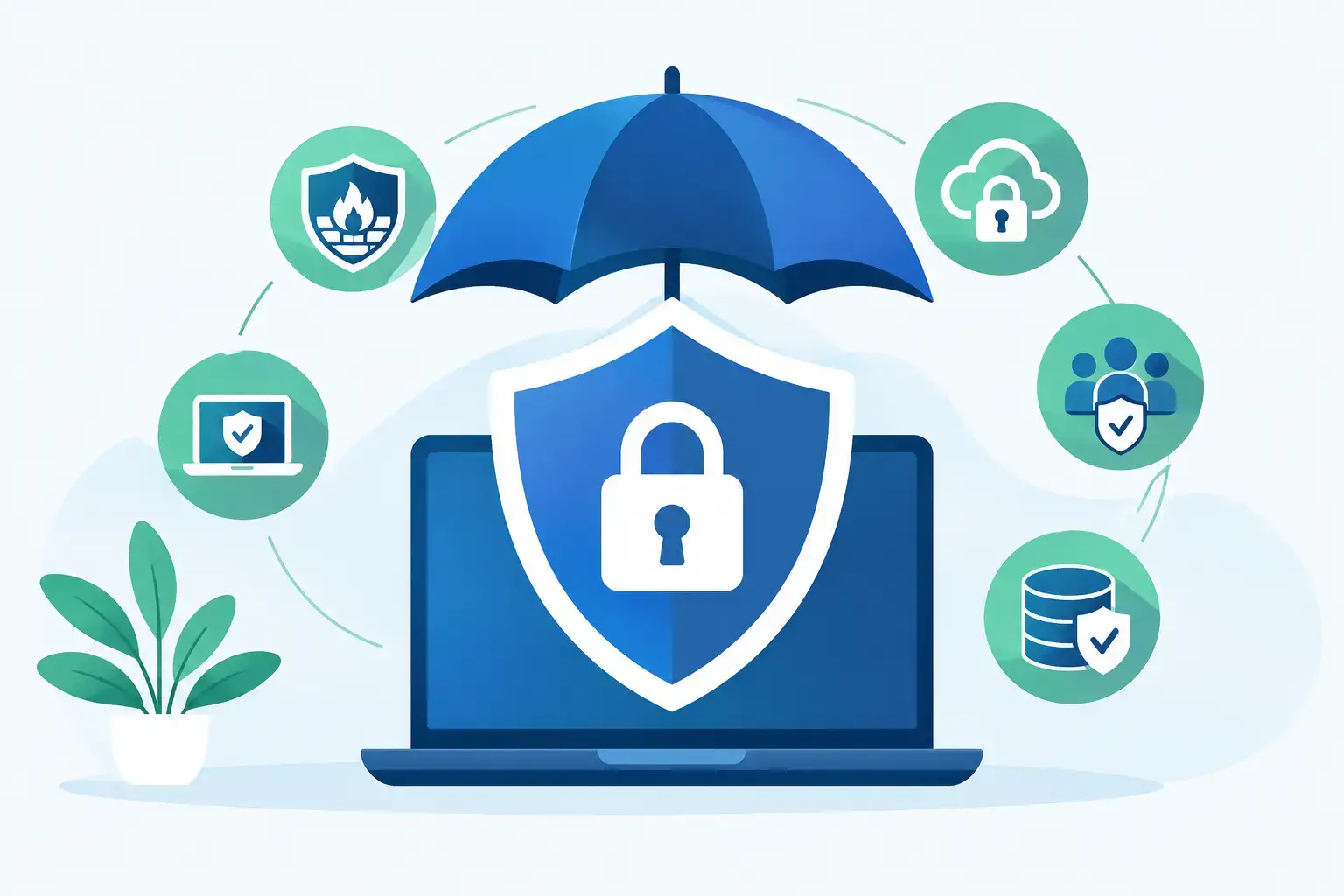
Cyber Insurance Controls That Strengthen Coverage
A cyber application can look straightforward until a business reaches the security-control questions. Cyber insurance controls are no longer minor underwriting details. They influence whether coverage is available, what it costs, which exclusions apply, and how effectively an organization can contain an attack that threatens revenue, customer trust, and day-to-day operations.
For many businesses, the challenge is not simply buying cyber coverage. It is aligning the policy, the organization’s actual technology practices, and the people responsible for responding when a cyber event occurs. A control that exists on paper but is inconsistently applied can create an underwriting problem before a loss and a difficult coverage discussion after one.
Why Cyber Insurance Controls Carry So Much Weight
Cyber losses have changed. Ransomware groups increasingly combine encryption with data theft and extortion. Business email compromise can move funds without deploying malware. A vendor’s compromised credentials can give an attacker a path into a company’s systems. The resulting expense may include forensic investigation, legal counsel, breach notification, credit monitoring, business interruption, data restoration, regulatory response, and third-party claims.
Carriers evaluate controls because those controls affect both the likelihood of an incident and the size of the loss. An organization with multi-factor authentication, tested backups, monitored endpoints, and a practiced response plan is generally better positioned to stop an intrusion early and restore operations faster. That can support more favorable underwriting terms, but it does not eliminate the need for carefully structured coverage.
The right approach is not to treat a carrier questionnaire as a technology exam. It is a risk-management review. Leadership should be able to identify its critical systems, understand its most material cyber scenarios, assign ownership for key safeguards, and document how those safeguards are verified.
Core Cyber Insurance Controls Underwriters Expect
Control expectations vary by carrier, industry, revenue, claims history, and the sensitivity of the data a business holds. Still, several safeguards are now central to most cyber underwriting conversations.
Multi-factor authentication
Multi-factor authentication, or MFA, adds a second verification step beyond a password. It should protect remote access, cloud email, privileged administrator accounts, virtual private networks, and other systems that could provide broad access if compromised.
MFA is one of the most common underwriting requirements because stolen credentials remain a frequent point of entry. However, implementation details matter. MFA coverage limited to a small group of users may not satisfy a carrier if all employees can access cloud email or remote systems. Businesses should know which platforms are covered, how exceptions are approved, and whether legacy protocols can bypass the requirement.
Endpoint detection, patching, and access management
Antivirus alone is rarely viewed as sufficient protection. Many organizations use endpoint detection and response tools to identify suspicious activity and give their technology team or managed provider a way to isolate affected devices. The value comes from active monitoring and response, not simply installing software and assuming it is working.
Consistent patch management is equally important. Operating systems, firewalls, business applications, and remote-access tools need timely updates, especially when a critical vulnerability is announced. A patching process should include ownership, a timeframe for urgent fixes, and a method to address systems that cannot be updated immediately.
Access management should follow the same discipline. Employees and vendors should receive only the access needed for their roles. Administrator privileges need close control, and access should be removed promptly when an employee leaves or a vendor relationship ends. These practices reduce the damage a compromised account can cause.
Secure, tested backups
A backup is valuable only if it can be restored when primary systems are unavailable. Carriers commonly ask whether backups are encrypted, separated from the production network, protected with MFA, and tested regularly. Attackers understand the importance of backups and frequently target them first.
Businesses should focus on recovery, not backup volume. Can the organization restore accounting data, customer records, production systems, and critical applications within an acceptable period? Are restoration responsibilities clear if a managed service provider maintains the environment? Those answers affect business interruption exposure as much as they affect underwriting.
Email, payment, and fraud controls
Business email compromise is often a financial-control failure as much as a cyber event. An employee receives a convincing message that appears to come from an executive, supplier, or customer, then changes payment instructions or sends funds to a fraudulent account.
Technical email protections help, but they should be paired with operational verification. A callback to a known phone number, dual approval for wire changes, and clear segregation of payment authority can prevent a costly loss. These procedures are particularly important because funds-transfer fraud coverage often has separate limits, conditions, or social-engineering endorsements that deserve close review.
Incident response planning and vendor readiness
A written incident response plan creates a decision framework before pressure and confusion take over. It should identify internal decision-makers, technology contacts, outside legal counsel, forensic resources, communications responsibilities, insurer reporting procedures, and the process for preserving evidence.
The plan does not need to be lengthy to be effective. It does need to reflect the business as it operates now. A tabletop exercise can reveal whether senior leadership knows who has authority to take systems offline, notify customers, authorize emergency spending, or communicate with a key client during a disruption.
Vendor readiness is part of that planning. Businesses often rely on managed IT providers, cloud platforms, payroll systems, payment processors, and software vendors. Contracts should clarify security obligations, notification responsibilities, access rights, and the parties’ roles after a suspected breach. A vendor’s failure may still create first-party costs and customer obligations for the insured business.
Match Controls to Your Actual Risk Profile
The most appropriate control environment depends on the operation. A manufacturer with connected production equipment may prioritize network segmentation and recovery planning for operational technology. A professional services firm may face greater exposure from cloud email compromise and the theft of confidential client files. A healthcare organization must consider the operational and regulatory impact of protected health information. A construction company with mobile crews and multiple devices may need stronger identity management and device controls.
This is also where insurance structure matters. Cyber policies can address privacy liability, network security liability, media liability, ransomware and cyber extortion, digital asset restoration, incident response costs, and business interruption. But definitions, sublimits, waiting periods, and exclusions differ. A business should not assume every policy responds the same way to a fraudulent payment, dependent business interruption, or loss involving an outsourced provider.
Controls and coverage should be reviewed together. If a policy includes a significant waiting period for business interruption, the company needs a realistic plan to continue operating during that period. If a carrier requires immediate notice and use of approved breach counsel or forensic vendors, those requirements should appear in the incident response plan.
Avoid the Checkbox Trap
A common mistake is answering an application according to intent rather than verified practice. For example, a company may state that MFA is in place because it is enabled for certain users, while privileged accounts or a legacy remote-access service remain outside the control. It may state that backups are tested because backups run nightly, although no full restoration test has occurred in months.
Those gaps can lead to misaligned coverage expectations. They also leave the organization exposed at the moment the control is needed most. Before signing an application or renewal, involve the individuals who manage IT, finance, operations, HR, and legal obligations. Ask for evidence: current access reports, backup test results, patching records, vendor agreements, and response-plan documentation.
A documented exception process is better than an informal workaround. If a critical legacy system cannot support MFA or a timely patch, leadership should understand the exposure, apply compensating measures where possible, set a remediation timeline, and discuss the issue candidly during the placement process. Some risks can be insured; others require operational correction before a carrier will offer acceptable terms.
Build a Review Process That Supports Renewal and Resilience
Cyber controls should be reviewed throughout the year, not only when the renewal application arrives. Acquisitions, new cloud software, remote-work changes, employee turnover, vendor transitions, and new payment processes can materially change exposure. A quarterly review of critical controls and a yearly incident-response exercise provide useful governance without creating an unnecessary administrative burden.
Leadership should also establish a clear escalation path. When a phishing attempt succeeds, a system is unavailable, or a vendor reports suspicious activity, employees need to know where to report it and who can activate the response plan. Speed matters. Early containment can reduce both the direct cost of an incident and the operational disruption that follows.
Williams Insurance Services helps organizations evaluate cyber exposure as part of a broader commercial risk strategy, connecting insurance placement with practical controls, claims guidance, and operational protection. The goal is not to promise that a cyber event will never occur. It is to ensure the business can make informed decisions before an event, respond decisively during one, and preserve its ability to operate afterward.
The most useful next step is to select one high-impact scenario - a compromised email account, ransomware event, or fraudulent payment request - and walk through what would happen in the first hour. The unanswered questions will often point directly to the controls and coverage decisions that deserve attention now.


Comments