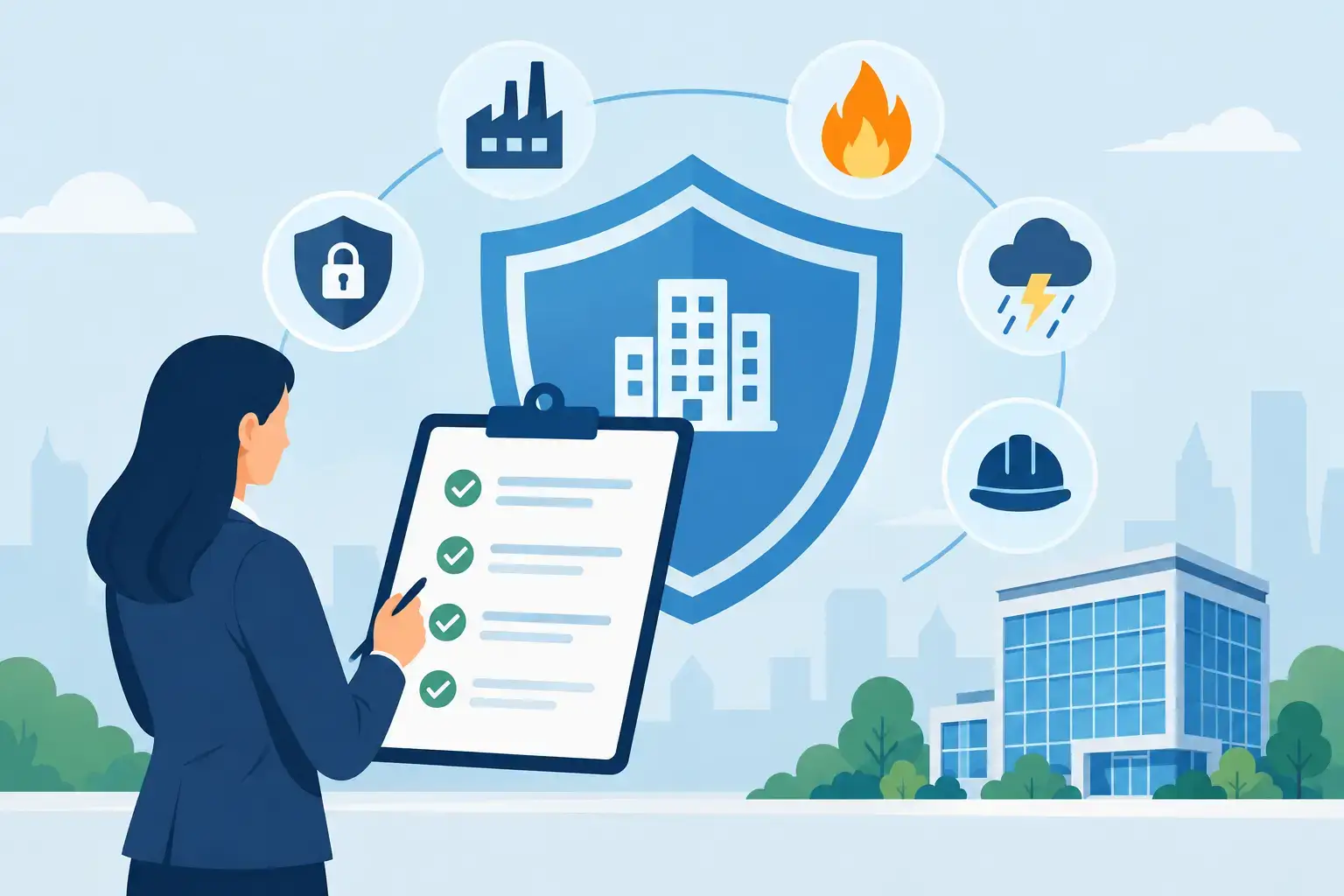
Commercial Insurance Risk Assessment Steps
A commercial insurance risk assessment should begin before a renewal application arrives and long before a loss tests the limits of a policy. For a business owner or operations leader, the real question is not simply, “What insurance do we need?” It is, “What could interrupt our operations, injure our people, create legal exposure, or threaten our balance sheet - and what is our plan if it happens?”
A meaningful assessment connects daily operations to insurance, safety controls, claims readiness, and legal obligations. That approach produces a coverage strategy built around the business you operate now, not the one described on an outdated application.
What a Commercial Insurance Risk Assessment Covers
Commercial insurance is designed to transfer selected financial consequences of risk. A risk assessment identifies those risks, estimates their potential impact, and determines which exposures should be prevented, retained, or insured.
The process should account for more than buildings, vehicles, and payroll. It should examine contracts, customer requirements, technology systems, workforce practices, supply chains, executive decisions, and the specific ways your business delivers its products or services. A contractor, manufacturer, professional services firm, transportation operation, and healthcare-related business may all carry general liability coverage, but their loss drivers and coverage priorities are very different.
The strongest assessments also distinguish between frequent, lower-severity events and less common losses that could materially disrupt the organization. Minor workplace injuries may affect experience modification and workers’ compensation costs over time. A major cyber event, severe auto accident, product liability claim, or property loss may create a high-severity event that demands higher limits, specialized coverage, or a formal continuity plan.
Start With Operations, Not Policy Forms
Policy language matters, but it should not be the starting point. Begin with a clear view of how the organization operates.
Consider the physical footprint: owned or leased locations, equipment, inventory, vehicle use, job sites, and property values. Then examine the people side of the business, including headcount, job duties, hiring practices, employee travel, remote work, subcontractor relationships, and the tasks most likely to cause injury. Finally, map the business relationships that can create contractual or professional liability, such as customer agreements, vendor contracts, leases, service-level commitments, and indemnification requirements.
This operational review often surfaces issues that standard applications do not fully capture. A company may have employees using personal vehicles for errands, a warehouse holding customer property, technicians accessing client networks, or a contract requiring higher liability limits and additional insured status. None of these details should be treated as administrative footnotes. They can materially affect coverage placement and claim outcomes.
Identify the Events That Can Stop Revenue
Risk decisions become more practical when leaders focus on interruption. Ask what would prevent the business from serving customers or generating revenue for one day, one month, or longer.
A fire or water loss may damage a facility. A cyberattack may disable scheduling, billing, production, or communications. A serious vehicle accident may remove key drivers or equipment from service. An employment dispute may consume management time and defense costs. The purpose is not to predict every scenario perfectly. It is to identify the events that deserve advance planning because the financial and operational consequences are significant.
Business income coverage, extra expense protection, cyber business interruption coverage, commercial auto physical damage, and contingent property considerations may all be relevant depending on the circumstances. The right structure depends on the actual dependency: one facility, one key supplier, a critical software platform, a fleet, or a small group of highly specialized employees.
Evaluate Core Insurance Exposures Together
Insurance policies should work as a coordinated program, not as isolated purchases. A commercial insurance risk assessment helps reveal where exposures overlap and where a gap in one line of coverage can affect the entire organization.
General liability coverage addresses many third-party bodily injury and property damage allegations, but it may not respond to professional errors, employment-related allegations, pollution events, cyber incidents, or auto-related losses. Commercial auto coverage should reflect vehicle ownership, leased or hired autos, driver selection practices, maintenance, radius of operation, and any employee-owned vehicles used for company business.
Workers’ compensation deserves the same level of strategic attention. Payroll classifications, job descriptions, return-to-work procedures, safety training, claim reporting, and medical management can all affect the cost and stability of the program. Organizations with difficult claims histories, multi-state exposures, or a strong commitment to loss control may also need to evaluate specialized workers’ compensation structures or alternative-risk options.
Cyber insurance requires a similarly fact-based review. The key issues include the type of data collected, system access controls, vendor dependencies, payment procedures, incident response roles, and the ability to restore systems quickly. Buying a cyber policy without reviewing operational safeguards can lead to costly surprises during underwriting or after an event.
Measure Risk With Financial Consequences in Mind
Not every exposure should be insured at the highest available limit. Sound risk management requires judgment about what the company can reasonably retain and what could cause unacceptable financial harm.
For each major exposure, estimate the likely frequency, the potential severity, and the organization’s capacity to absorb a loss. A deductible or self-insured retention may reduce premium and encourage disciplined claim management, but it also requires sufficient cash flow and a clear internal process. Higher deductibles are not automatically a better business decision if a single claim would force delayed payroll, postponed investment, or emergency borrowing.
Limits should be evaluated against realistic scenarios, contract requirements, asset values, payroll, fleet size, revenue, and litigation exposure. A company that signs large customer contracts or operates in a high-hazard environment may need higher liability limits than a peer with similar revenue but fewer contractual obligations. Excess and umbrella liability can provide an additional layer of protection, but the underlying policies must be structured correctly for that protection to respond as intended.
Turn Findings Into Controls and Accountability
Insurance transfers risk, but it does not replace operational discipline. After exposures are identified, assign ownership for the controls that can reduce their likelihood or cost.
For workers’ compensation, that may mean documented safety meetings, supervisor training, early injury reporting, modified-duty procedures, and active claim communication. For fleet risk, it may include motor vehicle record reviews, driver training, telematics, maintenance documentation, and a clear policy on distracted driving. For cyber risk, it may involve multi-factor authentication, employee phishing training, backup testing, vendor verification procedures, and a written response plan.
Controls should be practical enough to sustain. A detailed safety manual that no supervisor uses will not reduce losses. A concise process with assigned responsibilities, documentation, and regular review is more valuable than a policy that exists only for an insurance application.
Review Claims for Patterns, Not Just Costs
Claims data is one of the most useful tools in the assessment process. Review open and closed claims by cause, location, department, injury type, vehicle, customer, and time of year. The goal is to identify patterns before they become normalized operating costs.
A series of small slips, strains, backing accidents, water losses, or invoice fraud attempts may point to a correctable process issue. Fast reporting, accurate documentation, and coordinated communication with the carrier can also influence claim resolution. For more complex matters, access to claims advocacy and business or workers’ compensation legal guidance can help the organization protect its position while keeping operations moving.
Reassess When the Business Changes
A risk assessment is not a once-a-year exercise. It should be updated when the organization opens a location, acquires equipment, adds vehicles, launches a service, enters a new state, changes payroll, takes on a major contract, stores more inventory, or adopts new technology.
Annual renewal remains an important checkpoint, but a midyear conversation may be more valuable when operations shift quickly. Underwriters price the risk they understand. Clear, current information about safety practices, claims improvements, management controls, and business changes can support stronger placement discussions across standard, specialized, and alternative-risk markets.
Williams Insurance Services approaches this work as a coordinated risk strategy: coverage placement supported by loss prevention, claims guidance, and operational support. That broader view helps businesses make insurance decisions that fit their financial goals and real-world exposures.
The most useful assessment leaves leadership with a short list of priorities: exposures that need coverage attention, controls that need an owner, claims trends that require action, and business changes that should be reported. Address those priorities before the next loss or renewal deadline, and insurance becomes part of a more resilient operation rather than a cost considered only after something goes wrong.


Comments